Interactive workshops for ages 6–16

Better choices.
Brighter futures.

Age-appropriate school workshops that help young people think about choices, bullying, online safety, personal safety, consequences and careers.

Age-appropriateInteractivePositivePractical
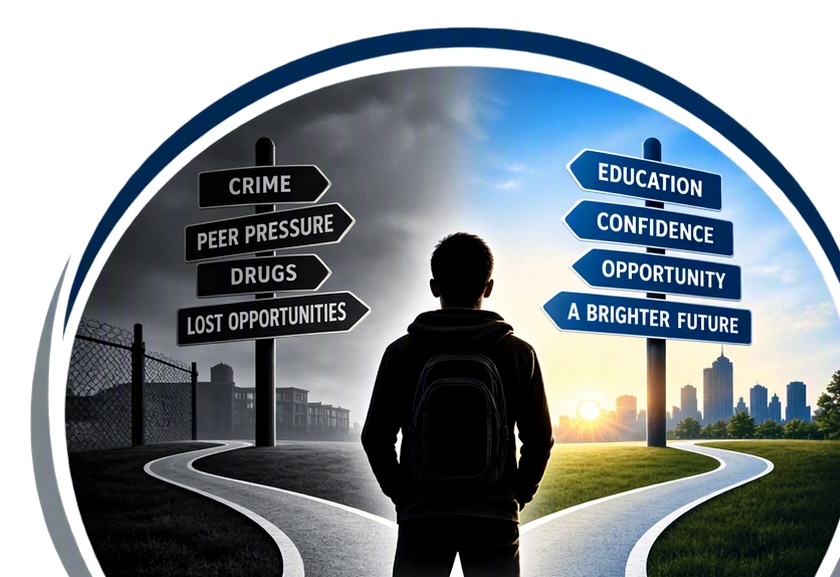
A young person standing at a fork in the road between different choices
EngageYoung people
EducateReal-life insight
InspirePositive choices
EmpowerBrighter futures
The programme

One message that grows with the child

The Choices We Make is built around a simple idea: what we do today can affect what happens next. The message stays consistent from age 6 to 16, while the language, examples and level of detail change with the age group.

The aim is not to lecture or frighten young people. It is to help them recognise pressure, think ahead, ask for help and see the opportunities that better choices can create.

Why the programme was created

“You cannot change yesterday. You cannot control everything about tomorrow. But you can control your next choice.”

Core programme message
Two age routes

Designed for ages 6–16

A six-year-old should not be expected to process the same material as a sixteen-year-old. The programme keeps the principles consistent while changing the language, pace and examples.

Ages 6–11

Little choices, big difference

Simple language, pictures, games and repeated safety rules.

  • STOP • THINK • CHOOSE • TELL
  • Kind choices and bullying
  • Staying safe online
  • Safe people and unsafe situations
  • Simple consequences
  • Trusted adults and asking for help
See primary workshop
Ages 12–16

My choices, my future

More mature scenarios around influence, responsibility and future opportunities.

  • Peer pressure and decision-making
  • Bullying and online behaviour
  • Social media and digital footprints
  • Consequences and prison reality
  • Confidence, opportunities and careers
  • What to do after a bad decision
See secondary workshop
What we cover

Real issues. Clear language. Useful actions.

01

Choices & consequences

Helping young people pause and ask: “What happens next?”

02

Bullying

In-person and online bullying, and how to be a helper rather than a hurter.

03

Online safety

Privacy, messages, fake identities, digital footprints and knowing when to tell.

04

Personal safety

Recognising unsafe situations, worrying secrets and trusted adults.

05

Real consequences

Age-appropriate discussion of responsibility, prison and loss of everyday freedom.

06

Careers & futures

How attitude, reliability, teamwork and learning can open doors.

For schools & youth organisations

Build a session around the issues your young people actually face.

Information for schools